


Water when necessary
September can be dry, particularly in a warm Indian summer. If rainfall is scarce and temperatures remain high, continue to water all crops regularly.
Sow green manures
If you haven’t already done so, field beans, annual ryegrass, and phacelia can be sown in September. They will overwinter and can be dug into the ground next spring.
Turn your compost heap
As you add this autumn’s mass of dead and dying plant material to your heap, turn it regularly with a fork to aerate it and stimulate decomposition. Water it if it’s dry, and cover it to keep it warm.
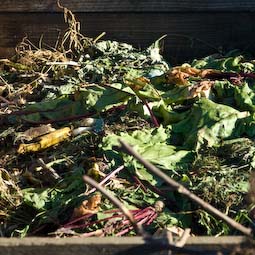
Compost all waste material from your plot except perennial weeds and any plants that show signs of disease. They should be burned or disposed of elsewhere.
Harvest any remaining onions
Lift any onions that are still in the ground, and dry them thoroughly before storing them.
Ripen and pick tomatoes
To prompt tomatoes to fatten up and ripen, cut off all the lower leaves (especially if they are turning yellow). Cover bush tomatoes with fleece or a cloche. Untie vine tomatoes from their canes, carefully bend them over, and lay them flat on a layer of clean straw. Pick all remaining green tomatoes by the end of the month and finish ripening them indoors.
Lift maincrop potatoes
Dig up most if not all of your potatoes by the end of this month. Although leaving them in the ground longer will result in larger tubers, there is a greater risk of attack by slugs. Dry them out, remove any damaged tubers, and store in lightproof potato sacks.
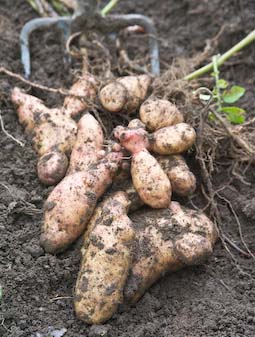
Old-fashioned, knobbly ‘Pink Fir Apples’ are regarded by many as one of the best-tasting of all potatoes.
Cut down asparagus
Tall, feathery asparagus foliage will be starting to turn yellow now and should be cut right down to just 2.5cm (1in) above the ground.
Earth up or stake Brussels sprouts
As Brussels sprouts and other autumn and winter brassicas grow steadily taller they may become top-heavy and require supporting. Earth up the stems or tie them in to stakes.
Feed and trim celeriac
Feed regularly with liquid manure and remove any old, damaged leaves from around the stem.
Ripen pumpkins and winter squashes
Remove a few leaves so that the sun can get to the fruits. Continue watering and feeding until you’re ready to harvest, this month or next.
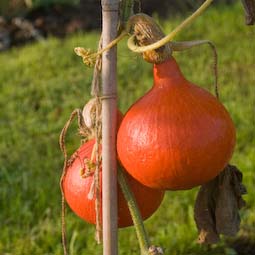
Expose squashes and pumpkins to the sun so that they ripen as fully as possible before you pick them.
Harvest apples and pears
Continue testing for ripeness and pick when the moment is right. Early pears can be picked while still slightly firm, then ripened indoors. Eat early season fruit straight away, and store mid- and late-season varieties.
Harvest sweetcorn
Cobs are usually ready for picking when the silks at the top turn brown or black. Pick cobs just before you need them as the sweet flavour deteriorates with storage. Test for ripeness and ensure sweetcorn is at its most succulent by peeling back the outer leaves and digging a fingernail into one of the kernels. Ripe corn exudes a milky, not clear, juice.
Prune blackberries and hybrid berries
As soon as you have finished picking, cut out all the old canes that carried this year’s fruit. New, non-fruiting canes should be tied in to take their place, ready for next year.
Order new fruit trees and bushes
November is the best month for planting many new, bare-rooted trees and bushes, so it’s worth ordering the plants from specialist nurseries this month for the widest choice.
Collect and save seeds
It’s worth saving certain seeds for sowing next year – especially plants you’re fond of and that may be hard to find commercially. Bean, pea, squash, pumpkin, melon, and tomato seeds can all be saved, dried, stored, and sown again – although not F1 hybrid varieties. It’s difficut to predict how these seeds will turn out.
Pick early apples and pears
Test early varieties for ripeness by gently twisting them, rather than pulling. If they come away easily, without tearing the stalk, pick them and eat them at once, as they won’t store.
Grape vines
Continue pruning side shoots and removing some of the foliage to expose fruit to the sun.
Earth up brassicas, potatoes, and celery
Keep earthing up potatoes to stop tubers being exposed, trench celery to keep stems out of the light, and brassicas to support unsteady stems.
“Ripen” garlic, onions, and shallots
Dry out or “ripen” any bulbs you intend to store. A few days before you harvest them, carefully loosen the roots from the soil. Lift them and lay them on the ground in the sun, or spread them out on wire racks to dry.
Feed pumpkins and winter squashes
For halloween-sized growth, feed once a week with high-potash tomato fertilizer. In damp weather, lift them off the soil on to bricks or planks of wood or they may rot.
Pest and disease watch
Vegetables
Cabbage white butterflies
Carrot fly
Leek moth caterpillars
Pigeons
Potato blight
Powdery mildew
Slugs and snails
Tomato blight
Tomato blossom end rot
Fruit
Bitter pit
Brown rot
Canker
Pear rust
Powdery mildew
Raspberry beetle
Scab
Silver leaf
Text and photographs copyright © 2010 Alan Buckingham.
 Allotment Month by Month
(Dorling Kindersley, 2009)
 Grow Vegetables
(Dorling Kindersley, 2007)
 Grow Fruit
(Dorling Kindersley, 2010)