


Weed regularly
Don’t ease up on hoeing. Weeds will be growing as vigorously as everything else on your plot. One consolation, however, is that some plants – those that produce lots of foliage (potatoes, courgettes, squash, etc.) – may keep weeds at bay by covering the ground and depriving them of sunlight.
Water to prevent bolting
Certain vegetables have a natural tendency to flower and run to seed as days lengthen and temperatures rise. Lettuces, rocket, spinach, cauliflowers, and Florence fennel are particularly prone. Watering regularly can help delay or even prevent bolting.
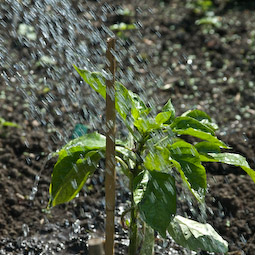
If the weather is dry, give growing plants a thorough watering at least every couple of days.
Mulch to conserve moisture
As soon as possible after rain, spread mulches such as garden compost, well-rotted manure, and even grass cuttings to retain moisture in the soil and keep it damp.
Net against birds
Continue to ensure that peas, brassicas, and soft fruit are all securely netted to keep off scavenging birds.
Dry out garlic, onions, and shallots
A few days before you harvest them, loosen the soil around the roots. Choose a dry spell of weather, lift the bulbs, and lay them on the ground in the sun. The more thoroughly you dry them, the longer they will keep.
Pinch out tops of climbing beans
Climbing beans don’t really know when to stop. Pinch out the growing tips when they reach the top of your canes or they will quickly become tangled and top-heavy.
Cut down broad beans
Once your harvest is over, cut plants down to just above the surface of the soil and compost them.
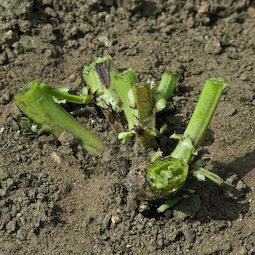
Leave the roots of broad bean plants in the ground, as they are rich in nitrogen.
Summer-prune blackcurrants
Lightly prune blackcurrants just before or just after picking the fruit. Prune again in winter.
Prune raspberries
As soon as you’ve finished picking summer raspberries, cut all the canes that have borne fruit down to the ground. Tie in this year’s new, green canes in their place.
Tie in blackberries and hybrid berries
Continue to tie in new canes – those that are growing up this year without bearing fruit. In the autumn, when harvesting is finished, you’ll remove the old canes, ready for the new ones to take their place next year.
Thin apples and pears
If your trees look overcrowded, even after last month’s “June drop”, thin them out still further in order to allow each fruit to grow to a reasonable size.
Prune cherries and plums
Summer-prune cherries and plum trees once you’ve harvested the fruit. Both are pruned in summer not winter.
Check all wire-trained trees
Inspect all espalier, cordon, and fan-trained trees to ensure all ties are secure but not too tight. Tie in or summer-prune new growth.
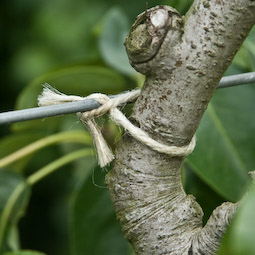
Branches of heavily laden fruit trees become increasingly weighed down as the fruit develops, and may need tying into supports.
Grape vines
Continue pruning side shoots and, if necessary, continue to thin fruit. Also remove some of the foliage to increase exposure to the sun and speed up ripening.
Spray runner beans
It’s said that spraying flowers with water deters them from falling and encourages the formation of bean pods; regular watering at the base of the plants may be just as effective.
Pinch out tomato shoots
Nip off the side shoots that appear in the “V” between leaf stems and the main stems of vine tomatoes. And pinch out the growing tip at the top of the plant once four or five trusses have formed. If you allow any more than that, the tomatoes are unlikely to ripen.
Feed tomatoes and peppers
Start regularly watering tomatoes and peppers with a liquid feed as soon as you see that the first fruits have formed. Feeding encourages both flowers and fruits.
Cover heads of cauliflowers
Protect white heads from turning yellow in the sun by pulling outside leaves over them and tying them in place.
Blanch celery and endives
Earth up trench celery to keep the stems out of the light, and place plates over curly endives to blanch the leaves.
Earth up brassicas and potatoes
Pull earth up around the stalks of Brussels sprouts and other brassicas if they seem unsteady, and give them a top-dressing of nitrogenous fertilizer or an organic liquid feed. Keep an eye on potatoes and if necessary continue to earth them up.
Take cuttings of herbs
Propagate perennial and shrubby herbs such as rosemary, sage, and thyme by taking semi-ripe, softwood, or stem cuttings.
Tidy up summer strawberries
Once your summer-fruiting strawberries have finished, you can tidy up old foliage, remove straw, and either cut off and discard any runners or use them to make new plants.
Summer-prune gooseberries, redcurrants, and whitecurrants
Summer-prune gooseberries, redcurrants, and whitecurrants Cut back to five leaves all this year’s new side shoots, except any you might want to develop into new branches next year. Removing foliage lets in light and air, helping any remaining fruit to ripen and reducing the risk of disease.
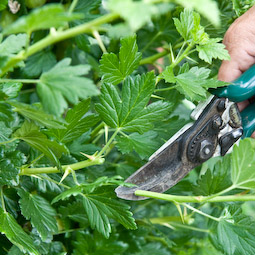
Cut back new growth this month to encourage the development of buds that will fruit next year.
Pest and disease watch
Vegetables
Asparagus beetles
Blackfly
Cabbage white butterflies
Cabbage root fly
Carrot fly
Flea beetles
Grey mould
Pea moth
Pigeons
Potato blight
Slugs and snails
Tomato blight
Fruit
American gooseberry mildew
Aphids
Birds
Bitter pit
Canker
Codling moth
Currant blister aphid
Grey mould
Pear leaf blister mite
Pear rust
Powdery mildew
Raspberry beetle
Sawfly
Scab
Scale insects
Slugs
Woolly aphids
Text and photographs copyright © 2010 Alan Buckingham.
 Allotment Month by Month
(Dorling Kindersley, 2009)
 Grow Vegetables
(Dorling Kindersley, 2007)
 Grow Fruit
(Dorling Kindersley, 2010)