


Apricots
A few early varieties may bear fruit this month, if grown in the right conditions.
Aubergines
Except in warm climates, July is early for aubergines, but if you sowed seeds in early spring you may get your first of the year at the very end of the month.
Beetroot
Continue regularly lifting beetroots before they grow too large. And remember that it’s not too late to sow more seeds if you want a continuous crop right through to the autumn.
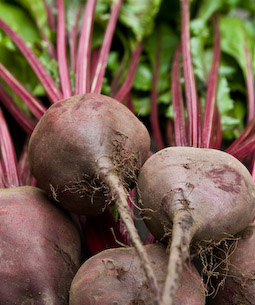
Beetroot are best picked when they’re between the size of a golf ball and a tennis ball.
Blackberries
The first blackberries may be ready to pick this month, as well as tayberries, loganberries, and other hybrid berries.
Blackcurrants
Traditional varieties ripen gradually, so pick the berries at the top of the trusses or strigs first. Modern varieties ripen all at once: cut off the whole strig.
Blueberries
Harvest your first blueberries now. Look for the plumpest, softest berries, with the darkest blue-black colour.
Broad beans
Bean pods should be swelling rapidly now. Check them every day or two and pick them regularly, starting at the base of the plant, before the beans become mealy and their skins tough and bitter. Keep an eye out for aphids too.
Broccoli
Harvest heads of calabrese and individual spears of sprouting broccoli regularly. Both should continue to shoot to give you an ongoing harvest.
Carrots
Early carrot varieties are best pulled and eaten while still young, slim, and super-sweet. Eat them raw, add them to salads, or lightly steam them.
Celery
The first crop of self-blanching or green celery should be ready to harvest this month. Watering before digging them up helps to keep them crisp for longer.
Cherries
July is the month for cherries, if you succeed in picking them before the birds.
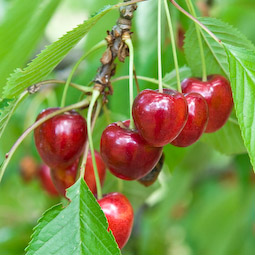
Pick ripe cherries by cutting them off with scissors or secateurs, with their stalks attached. Leaving the stalks behind can cause disease.
Oriental mustards
Harvest mixed sowings of Oriental mustard greens for baby-leaf salads, or leave them to grow larger and use them steamed or in stir-fries.
Peaches and nectarines
July is the first month for early peaches and nectarines grown under cover or in very sheltered spots.
Peas
Your peas should be fattening up quickly now. Pick a handful every couple of days before they become over-large. Eat them immediately, as soon after picking as possible.
Plums
Early-season plums may be ready to pick late in the month. Try to catch them when they’re slightly soft but not squishy.
Potatoes
Second earlies should be ready to lift this month. As soon as the flowers appear, scrape away some of the soil from one of your ridges and take a look. Lift salad varieties before they become too large, and eat them straight away.
Radishes
Harvest radishes from sowings made in late May or early June. Pull them while they’re still small or the flavour may become too fiery.
Raspberries
Pick summer-fruiting raspberries when they’re fully coloured and pull away easily, leaving the core or “plug” behind.
Red- and whitecurrants
The first currants ripen this month. Snip off whole trusses or “strigs”, and strip them at home.
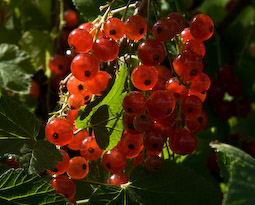
Perfectly ripe redcurrants may be sweet enough to eat raw. Berries that are not so ripe can be used for cooking or preserving.
Turnips
Harvest close-grown, multi-sown turnips when the roots are still small. That’s when they’ll taste at their sweetest and most nutty.
Chicory
The first sugarloaf and red chicories may be ready for harvesting. If so, they can be picked now for baby salad leaves or left to heart up later in the season.
Chillies and peppers
It’s still very early for chillies and peppers – unless you’ve grown them undercover in a polytunnel.
Courgettes
This is the start of the season for courgettes and summer squash. They are capable of literally doubling in size during the course of a single day, so inspect them regularly and harvest them often.
Cucumbers
Pick your first outdoor-grown cucumbers once they reach about 15–20cm (6–8in) in length. Any longer and the seeds are likely to be unpleasantly large.
Florence fennel
Cut fennel bulbs with a knife, about 2.5cm (1in) above the level of the soil, and leave the stump in the ground. Within a few weeks, new feathery leaves should have sprouted; use them in salads or stir-fries.
French beans
Dwarf bush varieties are likely to be ready for harvesting first. The pods grow alarmingly quickly and you’ll probably find you have to pick some every day to catch them while they’re still thin, tender, and at their best.
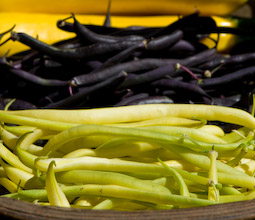
Dark ‘Purple Queen’ and yellow ‘Rocquencourt’ dwarf French beans.
Garlic
Continue lifting garlic as the leaves turn yellow and wilt. Spread the bulbs out in the sun to dry if you plan to store them. Otherwise, use them while they are still “wet”.
Globe artichokes
To catch artichokes at their best, pick the heads when plump while the scale-like leaves are still closed and before the purple flowers start to show through.
Gooseberries
By July, gooseberries are ripening properly. Some may be sweet enough to eat raw. Others still need cooking.
Kohl rabi
Early varieties are fast-growing and those sown in May could well be ready now. Don’t let them grow any larger than a tennis ball.
Leaf beet
Perpetual spinach or spinach beet and Swiss chard can be harvested now, either when young for salads or when older to be eaten cooked.
Lettuces
Small, semi-cos lettuces are relatively fast-growing. You can start cutting them as soon as the leaves at the centre begin to form a heart.
Marrows
If you prefer vegetable marrows while they are still relatively young and small, pick them now. If size matters, leave them to grow on to giant proportions.
Onions
Onions should be reaching harvestable size this month.
Rhubarb
This is your last chance for rhubarb. Don’t pick any more now. Instead, let the plant grow on normally so that it’s in good shape to withstand the winter and crop again next year.
Rocket
Most salad leaves, including the rocket shown here, can be harvested now. Treat them as cut-and-come-again crops: take what you want and the plant will sprout new leaves and continue growing.
Runner beans
The first runner beans of the year are undoubtedly the best. Don’t hold back and leave them too long or they’ll turn stringy. As long as there are still flowers, new beans will continue to form.
Shallots
Your first shallots should be ready this month. They are ready for lifting when the foliage has died down. Dry them on the ground in the sun or, if the weather is wet, undercover on wire racks or wooden slats.
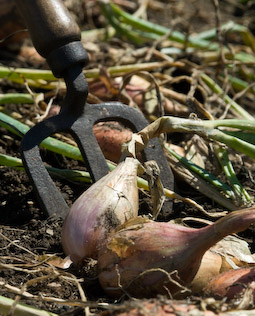
Dry out or “ripen” shallots thoroughly if you want to store them.
Spinach
Harvest and water regularly to deter spinach from bolting.
Spring onions
Continue harvesting spring onions – and sow more seeds if you want a last, final crop before the end of the year.
Strawberries
Pick strawberries regularly; remove any that are overripe, show signs of mould, or damage by slugs or birds.
Tomatoes
Unless you’re growing them under cover, this will be your first month for outdoor tomatoes. However, resist temptation and leave them on the vine until they are as ripe, sweet, and juicy as possible before picking them.
Vegetables
Aubergines
Beetroot
Broad beans
Broccoli
Carrots
Chillies and peppers
Courgettes
Florence fennel
French beans
Garlic
Globe artichokes
Kohl rabi
Leaf beet
Marrows
Onions
Oriental mustards
Peas
Potatoes
Rhubarb
Runner beans
Shallots
Spinach
Turnips
Salads
Celery
Chicory
Cucumbers
Lettuces
Radishes
Rocket
Salad leaves
Spring onions
Tomatoes
Fruit
Apricots
Blackberries
Blackcurrants
Blueberries
Cherries
Gooseberries
Melons
Peaches
Plums
Nectarines
Raspberries
Redcurrants
Strawberries
Whitecurrants
Text and photographs copyright © 2010 Alan Buckingham.
 Allotment Month by Month
(Dorling Kindersley, 2009)
 Grow Vegetables
(Dorling Kindersley, 2007)
 Grow Fruit
(Dorling Kindersley, 2010)