


Continue winter digging
As long as your soil is not frozen or waterlogged, you can still dig. But if the earth sticks to your boots when you walk on it, it’s too wet and you risk compacting the soil. Either keep off your beds altogether, or work from planks to distribute your weight.
Dig in rotted manure or compost
If you’ve already worked out next year’s planting plan, it’s worth digging plenty of organic matter into the beds where you intend to grow beans and peas. even more than most vegetables, they need rich, fertile soil.
Top up compost and leafmould bins
Continue adding any of last season’s old plant material to your compost heap, and collect any fallen autumn leaves for your leafmould pile or sacks. But burn or otherwise destroy any plant debris that looks as if it may be diseased.
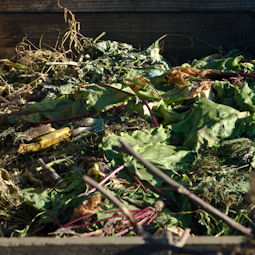
Your compost heap will rot down more quickly if you turn it from time to time and cover it to keep it warm. The hotter it is in the centre the more likely it is that weed seeds will be killed off.
Cover beds with polythene
As long as the earth isn’t waterlogged, it’s not too late to spread sheets or even old carpets over the soil in order to keep off heavy rain, suppress weeds, and help warm the ground ready for early sowing and planting next year.
Lift root vegetables for storage
Harvest the last of your carrots, turnips, kohl rabi, and any remaining beetroot. They can be stored if necessary. Celeriac and parsnips can stay in the ground if there’s no risk of their being “frozen in”, though a mulch of straw or bracken will help protect them.
Divide rhubarb
Rhubarb can last for years but may lose vigour, so divide the rootstock to make new “crowns”. Lift the existing crown and use a sharp spade to divide it into sections, each with a bud. Replant each section with the bud just showing, in well-manured ground.
Force chicory
Continue lifting chicory roots for forcing indoors, to keep you supplied with fresh winter salad ingredients.
Check spring cabbages and Brussels sprouts
Remove any brown or yellow leaves, earth up Brusssels sprouts stems if they are unsteady, and ensure nets are in place to keep off birds.
Prepare ground for new fruit trees and bushes
If it has not become too cold, prepare planting holes for new fruit trees and bushes. If the ground is frozen, you can wait – but no longer than the end of March.
Weed around fruit trees and bushes
If you didn’t do so last month, carefully weed and mulch around all established fruit trees, bushes, and canes.
Winter-prune apple and pear trees
Unless it is very cold, continue pruning dormant apple and pear trees, taking out dead, diseased, and damaged branches.
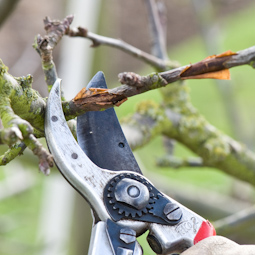
This new side shoot shows early signs of canker and should be pruned out before it spreads further into the heart of the tree.
Winter-prune fruit bushes
If you didn’t do so last month, winter-prune gooseberries and thin established blueberry and currant bushes, removing about a third of older wood on blackcurrants.
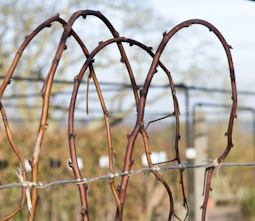
Summer-fruiting raspberries are pruned differently from autumn-fruiting varieties. New canes that grew this year won’t have fruited, but will do so next year. So, leave them unpruned for now, tie them in securely, and loop them over if they are taller than your topmost horizontal wire.
Prune grape vines
Now that the leaves have fallen, winter-prune outdoor grape vines. Some say the job should be completed by Christmas. Certainly, next month is your last chance before the sap starts rising and it will be too late.
Check wires and ties
Inspect all stakes, wires, and ties on your fruit trees and bushes. Replace any that are worn or broken, loosen any that are too tight, and ensure that others are secure.
Clean tools, pots and seed trays
Give all this year’s pots, seed trays, and other equipment a thorough wash and clean. It will help prevent any diseases or viruses carrying over and infecting next year’s new seedlings.
Pest and disease watch
Vegetables
Slugs
Mice
Pigeons
Fruit
Brown rot
Canker
Winter moths
Bullfinches
Text and photographs copyright © 2010 Alan Buckingham.
 Allotment Month by Month
(Dorling Kindersley, 2009)
 Grow Vegetables
(Dorling Kindersley, 2007)
 Grow Fruit
(Dorling Kindersley, 2010)